Choosing the right enterprise ecommerce platform is a strategic decision that directly impacts growth, customer experience, scalability, and long-term digital success.
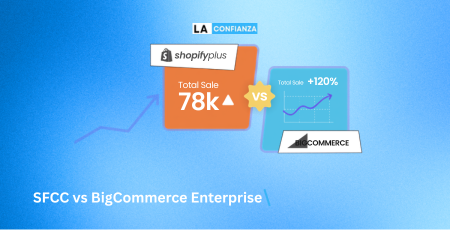
With increasing demand for flexible and scalable commerce solutions, businesses often evaluate leading platforms such as Salesforce Commerce Cloud (SFCC) and BigCommerce Enterprise.
Both platforms are widely used by growing and enterprise-level brands, but they differ significantly in architecture, customization depth, implementation approach, ecosystem integration, and overall cost structure.
This guide provides a detailed comparison of SFCC vs BigCommerce Enterprise to help businesses make an informed decision based on real-world commerce needs.
Understanding Salesforce Commerce Cloud (SFCC)
SFCC is an enterprise-grade ecommerce platform designed for large-scale businesses that require advanced customization, global scalability, and deep integration capabilities. It is part of the broader Salesforce ecosystem, which connects commerce with CRM, marketing, and customer data systems.
SFCC is commonly used by global enterprises that manage multiple brands, regions, and complex commerce operations. It is known for its strong performance during high-traffic events and its ability to support highly personalized shopping experiences powered by Salesforce data.
However, SFCC also requires specialized technical expertise and longer implementation cycles due to its enterprise-level architecture and development model.
Understanding BigCommerce Enterprise
BigCommerce Enterprise is a modern SaaS ecommerce platform designed for businesses that want flexibility, faster deployment, and lower operational complexity while still supporting enterprise-level growth.
It follows an open SaaS architecture that allows brands to integrate best-of-breed tools through APIs and build scalable commerce experiences without heavy infrastructure management.
BigCommerce is often preferred by teams that want to move quickly, reduce dependency on specialized developers, and maintain control over their tech stack while scaling operations efficiently.
Architecture and Flexibility Differences
SFCC is built on a controlled enterprise architecture designed for stability, performance, and global scalability. It uses a structured development model that ensures consistency across large deployments, making it ideal for complex enterprise ecosystems.
However, this structure also limits flexibility and can slow down development cycles, especially when compared to modern API-driven platforms.
BigCommerce Enterprise, on the other hand, is built around a flexible API-first approach. It enables faster development, easier integrations, and supports headless commerce implementations. This makes it more adaptable for businesses that prioritize speed and innovation.
Customization and Development Approach
SFCC offers deep customization capabilities through its proprietary development framework. Businesses can build highly complex commerce experiences, including multi-storefront setups, advanced personalization, and tightly integrated customer journeys.
However, customization in SFCC typically requires certified developers and longer development timelines due to its structured environment.
BigCommerce Enterprise provides a more accessible customization model. Developers can use APIs, webhooks, and modern front-end frameworks to create tailored experiences. It is especially attractive for teams working with headless commerce or modern JavaScript-based storefronts.
Performance and Scalability
SFCC is designed for high-performance enterprise commerce at a global scale. It is widely trusted by large brands that experience massive traffic spikes during peak shopping seasons. Its infrastructure is optimized for reliability, uptime, and consistent performance under heavy load.
BigCommerce Enterprise also offers strong scalability through cloud infrastructure. It automatically adjusts to traffic demands and supports growing businesses efficiently. While it performs well for most enterprise use cases, SFCC generally holds an edge in extremely complex, global-scale deployments.
Ecosystem and Integrations
One of SFCC’s biggest advantages is its native integration with the Salesforce ecosystem. Businesses using SFCC can connect commerce with Salesforce CRM, Marketing Cloud, Service Cloud, and customer data platforms, enabling a unified view of customer interactions across channels.
This deep ecosystem integration is a major reason large enterprises choose SFCC for digital transformation initiatives.
BigCommerce Enterprise takes a more open approach to integrations. It supports a wide range of third-party tools, ERPs, CRMs, and marketing platforms through APIs and app marketplaces. This flexibility allows businesses to build a customized tech stack without being locked into a single ecosystem.
Time to Market
SFCC implementations typically require longer timelines due to their complexity, customization requirements, and enterprise-level configuration. Organizations adopting SFCC often treat it as a long-term strategic platform rather than a quick deployment solution.
BigCommerce Enterprise offers significantly faster time to market. Its SaaS model, pre-built capabilities, and simpler onboarding process allow businesses to launch or migrate stores more quickly with fewer technical barriers.
Total Cost of Ownership
SFCC is a premium enterprise platform with higher total cost of ownership. Costs generally include licensing, implementation, development, and ongoing maintenance. While the investment is substantial, it is often justified for large enterprises with complex requirements and global operations.
BigCommerce Enterprise typically offers a more cost-efficient model. Its subscription-based pricing and lower infrastructure overhead make it attractive for businesses seeking enterprise capabilities without heavy operational costs.
Security and Reliability
Both platforms provide strong enterprise-grade security. SFCC offers advanced compliance support, robust fraud prevention integrations, and proven reliability for global enterprise deployments.
BigCommerce Enterprise also provides PCI compliance, secure cloud infrastructure, and regular security updates, making it a reliable option for most enterprise commerce needs.
When to Choose Salesforce Commerce Cloud
SFCC is the right choice for businesses that require:
- Complex, multi-brand or multi-region commerce operations
- Deep customization and advanced business logic
- Strong integration with Salesforce CRM and marketing tools
- High-volume global ecommerce performance
- Long-term enterprise digital transformation strategy
When to Choose BigCommerce Enterprise
BigCommerce Enterprise is better suited for businesses that need:
- Faster implementation and time to market
- Lower operational and technical complexity
- Flexible API-first architecture
- Scalable ecommerce without heavy infrastructure management
- A modern, modular commerce stack
Final Verdict
Salesforce Commerce Cloud and BigCommerce Enterprise are both powerful ecommerce platforms, but they serve different business needs and maturity levels.
SFCC is best suited for large enterprises with complex requirements, deep personalization needs, and strong reliance on the Salesforce ecosystem. It is a long-term investment designed for scale, complexity, and enterprise transformation.
BigCommerce Enterprise is ideal for businesses that prioritize speed, flexibility, and lower operational overhead while still maintaining enterprise-grade capabilities.
The right choice ultimately depends on your business strategy, internal technical expertise, and long-term digital commerce goals.
Need Expert SFCC Implementation Support?
Selecting the right ecommerce platform is only the first step. Successful implementation requires careful planning, architecture design, and ongoing optimization.
Our team specializes in Salesforce Commerce Cloud (SFCC) consulting, implementation, migration, and support services. We help enterprises build scalable, high-performance ecommerce solutions tailored to their business needs.
If you're evaluating SFCC or planning a migration, we can help you define the right strategy and execute it effectively.